
In the opening shot of Michael Cacoyannis’s 1977 film Iphigenia, we are exposed to the “thousand ships launched by Helen,” preparing to set sail for Troy, and hundreds of Greek actors camped naked on the beach. When we first meet the actor playing Achilles, he also isn’t wearing a thing. This is in stark contrast to Nolan’s portrayal of these same heroes in The Odyssey. There is a blink, and you’ll miss it bare butt when Damon’s Odysseus shoots a deer who turns out to be a human transformed by a witch. We see a bit more skin after his men are turned into pigs and back again, but that’s pretty much all we get. Even then, the nudity is played up for shock, suggesting it was anything but natural in ancient Greece.

Watching scene after scene of Odysseus and crew rowing in their bronze plate armor and bronze helmets, I couldn’t help but be pulled out of the story, remembering all the sweltering summers I spent on the Greek islands. Now, I didn’t go into the movie expecting to see Matt Damon’s penis. But I assumed his men would at least be going shirtless. The Aegean Sea can be scorching most of the year, and as anyone who has gone boating can tell you, the last thing you want to be wearing out on the water is heavy clothing, certainly not an ill-fitting piece of tin and copper. Aside from how hot metal can get under the sun, armor in ancient times was anything but comfortable. There was no padding in those days, and, according to Herodotus, helmets severely diminished your vision and hearing. Never mind casting Lupito Nyong’o as Helen; this, to me, was the most egregiously implausible thing in the movie. We know from ancient vase paintings and murals that people of antiquity preferred going nude when practical. Countless works of art housed in the Louvre and other museums in Europe show Homer’s heroes wearing nothing but sword and shield. This is why the Greek producers of Iphigenia felt it necessary to depict a thousand naked men standing on the beach because, if there is any historicity to the events of The Odyssey, and I believe there is, this is most likely what it would have looked like.

For the past few decades, I’ve noticed a growing trend toward prudishness, not just a lack of nudity in movies and TV, but an overall lack of skin. Barring the occasional adult-rated series like Game of Thrones, which used bare butts and genitalia as a marketing tool, innocent portrayals of the human body are fast disappearing. In the 1959 film Ben-Hur, a bare-chested Charlton Heston tugs at the oars of a Roman slaveship. In the original 1981 Clash of the Titans, a young boy (the hero Perseus as a child) and his mom stroll along the beach sans bathing suit. That movie, by the way, was rated PG. People in the 80s, it seems, understood that nudity didn’t always have to involve sex. Today, I imagine, keyboard warriors on social media would be raising a ruckus over it, suggesting the movie was advocating pedophilia. This trend toward prudishness is much more prevalent in the States, however, as Europe has yet to catch on.
In the 2024 film The Return, Ralph Fiennes’ Odysseus arrives in Ithaca without a stitch to his name. Fiennes gets to his feet to wander the island before finding shelter. But even after he is invited into Eumaeus’s, the pig farmer’s, home, he doesn’t immediately get dressed. Fully committing to the role, the actor goes Full Monty as he gazes wistfully over his homeland. And it’s not just this scene that more accurately reflects Greek fashion. The other actors, representing the people of Ithaca, traipse about the island either bare-chested or in simple one-piece garments such as the chiton or peplos. A similar scene in Nolan’s version has Matt Damon drifting out to sea on a plank of wood, but his pants remain intact, and he even gets to slip into a little vest before encountering the locals. A lot of the clothing in that film, in fact, from what Tom Holland’s Telemachus is wearing to Jon Bernthal’s Menelaus, looks like it came from an Old Navy catalog. The Return is a deeper, more nuanced, more psychological film, and an excellent alternative to Nolan’s interpretation. It also isn’t afraid to depict ancient Greek life accurately, which is no surprise, given that The Return was produced in the UK, where public nudity is legal so long as no Karens complain.
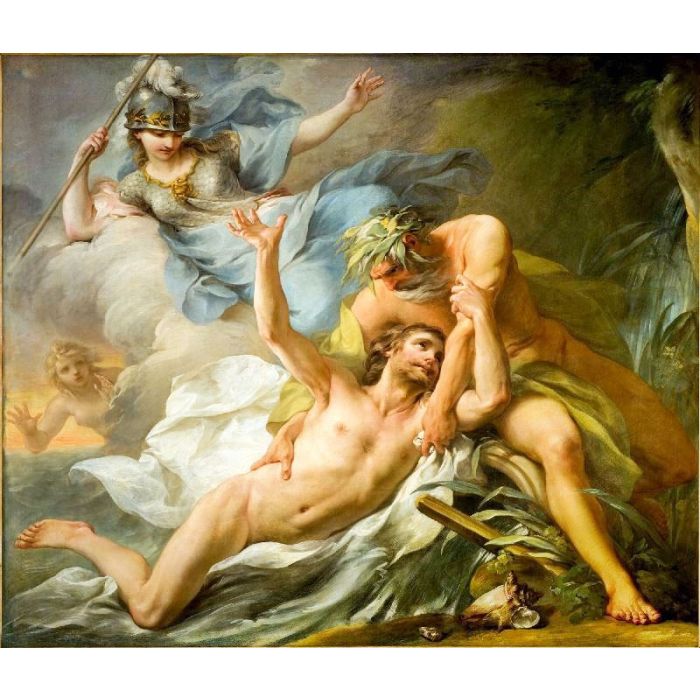
Would I have preferred Damon and crew to drop trou in The Odyssey? Of course! Nudism is in desperate need of positive publicity, and what better way to do that than a billion-dollar blockbuster? But the lack of dangly bits in no way ruined the movie for me. I enjoyed it quite a bit, in fact. But the way in which my culture is represented matters a lot to me. I consider nudism a part of my history and heritage. My parents weren’t afraid to take me to the nude beaches of the Greek Isles as a child or to display their naked Poseidon statue in our home. Before the Judeo-Christian influence taught the Western world the meaning of shame and the story of Adam and Eve, the unadorned human body wasn’t just the norm but the ideal. My Spartan ancestors exercised nude, sparred nude, and competed in sports in the nude. Artisans like Praxitiles, Leonardo, and Michelangelo spent lifetimes immortalizing the human form in stone. Heroes and gods frolicked on vases and murals throughout the Greek and Roman world in nothing but their bare skin. You can always identify Apollo and Aphrodite by their absence of clothing. In the Homeric poems, nudity represented divinity and heroism, but in the Bible, it also represented poverty. Jesus preached that we should “clothe the naked” because in those days you couldn’t pick up a pair of shorts for $10 at Walmart. So when Odysseus washes up on shore without a stitch to his name, he is treated not as a sex offender, but as a beggar, which makes you wonder how anyone would have known Damon’s Odysseus was in need of food and shelter.
As a Greek nudist who pines for the Classical and Renaissance age, I am disheartened by what skin is becoming in our culture. When so few actors are expected to show their nipples on set, is it any wonder half the kids at the beach are afraid to swim without a shirt? The human body has been hijacked by the internet for the purposes of producing p@rn and profiting from sex. I see it almost every day when I check my book sales, only to find that a majority of Thelana fans don’t care to understand the ethos integral to her clothes-free society. In this late-stage capitalist world we are living in, where money means everything, it would seem innocence and dignity are no longer worth preserving.


For many years, I enjoyed being naked but felt uncomfortable being open about it. Nakedness, even talking about body parts, was severely frowned on when I was growing up.
LikeLike
It doesn’t look like I can edit or delete my above comments that unfortunately had nothing to do with your blog. In my defense, I felt pretty sick at the time and excited that I had actually found a way to post my comments. Anyway, my own views on nudity used to coincide with many others’: nudity is all about sex. What I didn’t express was my parents’ Mennonite upbringing that made nudity, movies, and generally anything produced after 1960, bad and unwholesome. I hate to see movies return to the mindset that nudity is only adult material and sexual (if they ever left it). I see nudity as the freeing, beautiful expression of who I am as you’ve described it. I really like your blog and appreciate you posting my comments, even when they didn’t make a lot of sense!
LikeLiked by 1 person
There are dozens of nudist blogs already that deal with nudism and the freedom that comes with it. My blog takes a more unique approach to the subject by focusing on nudity in popular culture and media, like Chris Nolan’s ‘Odyssey.’
LikeLike