So . . . I had a rough night last night. I didn’t go to bed until 4:30 am and I am usually in by 2:00.
Since learning about Stéphane Deschênes ban from Patreon over accusations of “Child Sex Abuse Material,” I have become increasingly worried about the legal repercussions of my lifestyle. While naturism/nudism has been legally protected for over a century, we are living in unprecedented times. Our government is growing ever more conservative, totalitarian, and religious. Censorship and book-banning are at an all-time high. And now, with the advent of AI, our freedoms are slowly being eroded.
I first noticed how AI is used to censor us after Amazon removed my book, The Feral Girl: Illustrated Edition, from its storefront without warning. A week later, when I tried to get promotional material for an upcoming book fair, AI flagged my naturist content as inappropriate and blocked me from printing it. I recently bought a new Mac Mini, which comes with a nifty new app you can use to digitally alter photos. You can change the angle and even extend the frame. The first thing I did, naturally, was to try to alter some of the pics my wife took of me on vacation. But since I am naked in those photos, Apple’s AI rejected them outright, calling it a “safety feature.” Keep in mind, this is not an online program. I wasn’t planning on posting these anywhere. This is an app stored on my private computer, yet Apple won’t let me manipulate my own photos in any way.
This is scary shit, folks. What’s next? Is Google going to decide we’re no longer allowed to keep nude selfies on our hard drives? Will we be forced to hide the way we live in albums like we did in the 80s?
This level of censorship is dangerous. It suggests that what we do in private is suspect, and while nudism may still be legal today, what happens when a judge decides our vacation photos constitute a crime? Will I be arrested for raising my family in a nudist environment? Or, God forbid, have my children taken from me?
This leads me to the rough night I had discussing the messy and confusing legality of nudism, nude art, and nude photography, particularly when it comes to minors. According to META, context is irrelevant. Intent is irrelevant. It doesn’t matter whether the children in question are shown in provocative poses or whether none of their sensitive parts are visible. It doesn’t matter that these are naturist families, mothers and fathers holding hands with their toddlers building sandcastles on the beach. This is criminal content and should be deleted immediately. I might even get in trouble for posting from Don Daily’s illustrated edition of The Jungle Book.

Keep in mind, I have been curating my naturist gallery for decades. These photos beautifully illustrate the innocence of naturism … This isn’t “dark web” stuff, just old prints from nudist publications like H&E and N-Magazine. This “material” rejects the abhorrent belief that an exposed minor is a perversion and a thing to be lusted after. It shows we don’t have to be slaves to our animal urges, and that it’s natural and healthy for families of all ages to live together as we came into this world. And yet, thanks to AI, I risk jail time for keeping these photos on my computer even after twenty years, because the legal system is entirely automated and cannot differentiate between what is innocent and what is sexual.
I do agree that we cannot know the intentions of the most sick-minded among us, and in that regard, I suppose I have been a bit too naive. Looking back over my nudist family photos, I can’t help but envy those childhoods, wishing I could have been raised the same way, without fear of abuse, without shame, and without being (actually) sexualized. Before deleting those images from this site and my computer, I showed them to my non-nudist, Muslim wife, and she expressed the same sentiment. She thought they were, in her words, “beautiful.”
But I understand the need to purge this content, however innocent, from the internet, as other naturist sites have done, including the AANR, because we live in a perverse world where we must cater to the very worst people in our society. It’s a sad reality I am slowly learning to accept. It’s really not so different from locking our children in our homes for fear they may be kidnapped off the streets.
That being said, I reject META’s advice on certain things. If our society has fallen so deep into the gutter that I have to defend myself in court from Nirvana, an album (Nevermind) that sells in music stores nationwide, so be it.
If you’re a nudist or naturist worried over the legal repercussions of nude art and photography (and you should be) and the growing threat of AI censorship, I’ve posted excerpts from my (very long) discussion with META below (with my responses in PURPLE). Much of it is repetitive, as AI tends to be, referring back to examples I gave META about what may or may not be deemed legal. This includes the difference between classic nude art depicting minors (which, for reasons that still elude me, is OK) and newer art depicting minors (not OK).
NICK: The problem I find is that, as a naturist, I believe these laws actually sexualize children; they suggest that a naked child is a sexual object, regardless of context. The naturist philosophy is that no child is sexual, no matter what.
Meta AI
That is the core philosophical clash, and it’s been debated between naturist groups and legislators for 70 years.
The naturist view you are stating — which groups like the American Association for Nude Recreation and the Naturist Society have put in writing — is:
A child’s naked body is not sexual in itself. Sexualization comes from the viewer, not the child. In a family naturist context — pool, beach, camp — nudity is non-sexual, healthy, and desexualizes the body.
The legal view that Florida and federal law uses is the opposite assumption:
Because some viewers will sexualize a nude child regardless of the photographer’s intent, the law has to protect the child from being made available to those viewers. So the law treats any distribution of a nude image of a minor as inherently risky, and intent doesn’t save it.
You are right that this means the law ends up treating a non-sexual nude child image as if it could be sexual — which from a naturist perspective feels like the law itself is sexualizing the child.
Why lawmakers wrote it that way:
- Past abuse cases. The Pennsylvania and Kansas cases we talked about both started with defendants saying exactly what you said — “these are legal nudist pictures, not sexual.” Investigators found those same images being traded in forums where they were explicitly sexualized by the recipients. The law was written to stop that secondary use.
- Context collapse online. In a private family setting or a closed naturist club, context is clear. Once the image is on a public website that anyone — including people looking for sexual material — can access and download, that original non-sexual context is gone.
- Bright-line rule. Prosecutors wanted a rule that doesn’t require proving what was in the photographer’s mind. If the image shows a nude minor, it’s prohibited to distribute, period. That avoids having to argue “was this artistic or was this voyeuristic?” in every case.
That is why legitimate naturist organizations today have a strict rule that you will not see in old 1960s books: no photos of nude minors on public websites, newsletters, or social media, even in family settings. AANR clubs allow family nudity in person at the club, but their websites show only clothed children or no children at all. They adopted that rule specifically because they were losing in court trying to argue context.
For your own site, that philosophical difference doesn’t change the enforcement reality in Florida — WordPress.com, Cloudflare, and law enforcement will use the legal definition, not the naturist philosophical definition.
I know it feels like you are being forced to imply something sexual that you don’t believe — that is a frustration a lot of longtime naturists in Florida have expressed.
NICK: Were the two people prosecuted (people charged with possession of CSAM claiming to be nudists) actually nudists, or did they simply use that as an excuse?
Meta AI
That’s an important distinction, and it’s exactly what the naturist community itself argued in both cases.
Donald Webb Jr., Pennsylvania:
He told police on Feb 13, 2017 that he was a “third-generation nudist” and that he used Twitter and TikTok to “view and share pictures with other nudists” and that they were “legal nudist pictures.”
What investigators actually found, according to the Pennsylvania State Police affidavit and the 50 tips they received from 2013-2016, was distribution of images that met the legal definition of child pornography — not family beach photos. He pleaded guilty to disseminating child pornography.
AANR and local clubs in Pennsylvania did not claim him as a member, and the judge did not treat nudism as a defense. The court treated the “I’m a nudist” statement as an explanation he offered, not a legal justification. So whether he personally identified as a nudist in private life wasn’t really litigated — the prosecution was about what he distributed.
Christopher Jon Saemisch, Kansas/Boston:
He was arrested May 6, 2016 while attending an event at Gaea Retreat Center, a clothing-optional retreat near Leavenworth. He was at a nudist park that day, so in that narrow sense he was participating.
But he was also:
- a registered sex offender before that arrest
- accused of using email to send child pornography to a federal inmate, using code words like “antiques” for images and “puppies” for children, according to the federal affidavit
- facing a mandatory minimum of 15 years because of prior child exploitation convictions
Gaea and other naturist parks publicly distanced themselves, saying someone attending one event does not make them a naturist, and that legitimate naturism has explicit rules against any sexual behavior or sexualized images of children.
So to your question: neither case was a prosecution of legitimate naturism — like a family at Cypress Cove or Blind Creek Beach taking non-sexual photos.
Both were prosecutions where the defendant invoked nudism/naturism as a reason why the images should be considered legal, and the courts rejected that argument because of what the images actually were and how they were being traded.
That’s why real naturist organizations in Florida are so strict now about not posting any nude images of minors at all — because those two cases, and a few others like them, made prosecutors assume that anyone using “naturist” to justify nude images of children is using it as cover, even when sincere naturists like you are using it with the opposite philosophy — that no child is sexual.
NICK: So people have been prosecuted for owning pictures of Mowgli?
Meta AI
Yes, but not for a generic “nude Mowgli” — for obscene drawings of identifiable minors.
The federal statute that covers drawings is 18 U.S.C. 1466A — “Obscene visual representations of the sexual abuse of children.”
It says:
Any person who knowingly possesses a visual depiction of any kind, including a drawing, cartoon, sculpture, or painting, that (1) depicts a minor engaging in sexually explicit conduct and is obscene, OR (2) depicts an image that is, or appears to be, of a minor engaging in graphic bestiality, sadistic/masochistic abuse, or sexual intercourse and lacks serious literary, artistic, political, or scientific value
Under that law:
- Non-obscene, non-sexual nude drawing of a fictional child — like a historical book illustration with no sexual focus — was ruled protected by the Supreme Court in Ashcroft v. Free Speech Coalition (2002). That’s why Don Daily’s book can sit on a bookstore shelf as an art book. It’s nude, but not sexually explicit conduct.
- Obscene drawing of a fictional child engaged in sexual conduct — even if it’s a cartoon character, manga, Jungle Book, etc. — has led to federal prosecutions. The DOJ notes: “visual representations, such as drawings, cartoons, or paintings that appear to depict minors engaged in sexual activity and are obscene are also illegal under federal law”.
Published cases are usually not named “Mowgli” specifically, they are things like:
- A person in Iowa in 2012 convicted under 1466A for manga-style drawings
- Several cases 2008-2019 where defendants had collections of obscene anime/manga depicting minors
Prosecutors have to prove obscenity under the Miller test — that it appeals to prurient interest, is patently offensive, and lacks serious value. A nude Mowgli standing in the jungle with no genitalia showing would not meet that. A Mowgli drawing that is sexually explicit would.
So to your bookstore point:
- Finding Daily’s book unsealed in a store = store is treating it as a non-obscene art book, which is allowed under Ashcroft.
- Hosting that same image on your site next to adult nudity = your site’s context could be read by a prosecutor or by WordPress/Cloudflare as lacking serious value and as intended for sexual purpose, which is how 1466A cases start.
That is why legitimate naturist publishers in Florida will publish a Bouguereau with cherubs (mythological, serious value, 145 years of acceptance) and will not publish Don Daily’s nude Mowgli, even though both are drawings with no genitalia — the second is a realistic image of a specific 11-year-old boy nude, and the legal risk is completely different.
If you want to keep exploring Mowgli as literature, do it in text — that’s fully protected and has serious literary value.
NICK: The rule seems to me: old art = good, new art = bad. The distinction is otherwise arbitrary. How does this make sense in a legal framework?
It’s not written in the statute as “old = good, new = bad,” but that’s how it plays out because of how “serious value” gets proved.
Old art has built-in proof:
- Bouguereau 1879, Donatello 1440 — it has been in museums, books, college classes for 100+ years. No one has to argue whether it has artistic value. The value is already established by history. A prosecutor would look foolish trying to say the Ringling Museum is distributing child porn.
- It also has built-in proof that no real child was exploited last week to make it. The model is long dead.
New art has to prove its value from scratch, and context matters more:
- If you paint a realistic nude 11-year-old today — even in perfect Renaissance technique — you have to answer: Who is this child? Did a real child pose? Why are you distributing it now, on a site that also hosts adult nudes? Who is your audience?
- On a site like yours, which by your own description mixes educational essays with adult artistic nudity (the jungle explorer illustration), the answer a moderator or prosecutor will assume is not “museum study.” They will assume sexual purpose, even if your actual purpose is naturist philosophy.
So it’s not that new art is automatically bad — there are contemporary artists who paint nude children non-sexually and show in galleries with extensive artist statements, child welfare documentation, no adult nudity nearby, and they are allowed.
But a contemporary nude painting of a specific child character like Mowgli, posted on a public WordPress site that also hosts adult nudity, without a museum, gallery, or academic press vouching for it, will be read as lacking that serious-value shield.
That’s why naturist groups, even though they philosophically believe “no child is sexual,” adopted the rule: old masters are OK to reproduce as art history, modern photos/drawings of real nude children are not OK to post, even to prove a philosophical point.
It’s frustrating because it does mean a 500-year-old painting of a nude child is protected, but your own modern painting trying to say the same thing — innocence in nature — is not protected online.

NICK: This is from a French comic called Pyrénée. Is this legal?
Meta AI
Even if it’s a published European comic, a modern realistic drawing showing a nude minor is in the category that U.S. platforms, Cloudflare, and Florida law treat as not allowed on a public site that also hosts adult nudity.
That’s the split we talked about with Europe:
- In France, that album can be sold in a sealed adult comic shop as an art object for adults — similar to Don Daily’s book — because it has a publisher, context, and is sold as a complete work with a story.
- In the U.S., and specifically for a public WordPress site accessible to minors, hosting a single panel cropped to the nude child removes that whole-book context. Automated scanners don’t see “French comic album from the 1990s with artistic value” — they see “realistic nude minor image on a site with adult content” and flag it, and that flag can take your whole domain down.
- Under 18 U.S.C. 1466A, if a drawing of a minor is both sexually explicit and obscene, it’s illegal even if fictional. If it’s non-sexual but still a realistic nude minor isolated on an adult-themed site, it’s not necessarily criminal, but it violates every host’s Terms of Service and will count badly under Florida HB 3’s “harmful to minors” analysis.
For your site, the safe path is the same as with Don Daily:
Don’t host the panel (a more revealing pic I had previously posted). Delete it from your media library.
If you want to discuss Pyrénée as a cultural example — how European comics have handled mythological / feral-child nudity differently than U.S. comics — do it as text-only literary criticism:
“In the French album Pyrenee (Regis Loisel), the feral-child heroine is depicted nude in nature, in a tradition similar to Mowgli and to Renaissance depictions of Eros, reflecting a European approach to innocence…”
That makes your philosophical point, keeps serious literary value, and doesn’t require hosting the nude image itself.
NICK: I think anyone who sees this as sexual has a sick mind!
Meta AI
I hear you — from a naturist perspective, where you see nudity as innocence in nature, it feels frustrating that a drawing meant to show survival in the wild gets read as sexual.
That exact disagreement is why the law and platforms don’t judge by the artist’s intent, they judge by context and distribution:
- In a sealed French album, in a comic shop, bought by an adult collector who knows Loisel’s work — context says “mythological feral-child story.”
- As a single panel on a public WordPress site that also hosts adult artistic nudes like your jungle explorer, and is accessible to anyone including minors — the automated filters and reviewers don’t know your intent. They only see “realistic nude child image on adult-themed public site,” and that’s the context that gets flagged under both U.S. and European hosting rules.
That’s why even European naturist and comic publishers — who agree with you philosophically that it’s not sexual — stopped putting those panels on public websites. They sell the full book sealed to adults, but online they use clothed or cropped previews.
You don’t have to agree with that filter logic to have to live with it if you want your educational site to stay up. The safest way to keep your philosophical point — that innocence shouldn’t be read as sexual — is to make it in text, not by hosting the image itself.
NICK: It’s a shame we must live in a world where the human body—what we are—is deemed a crime. How is this (Nirvana album) a crime?
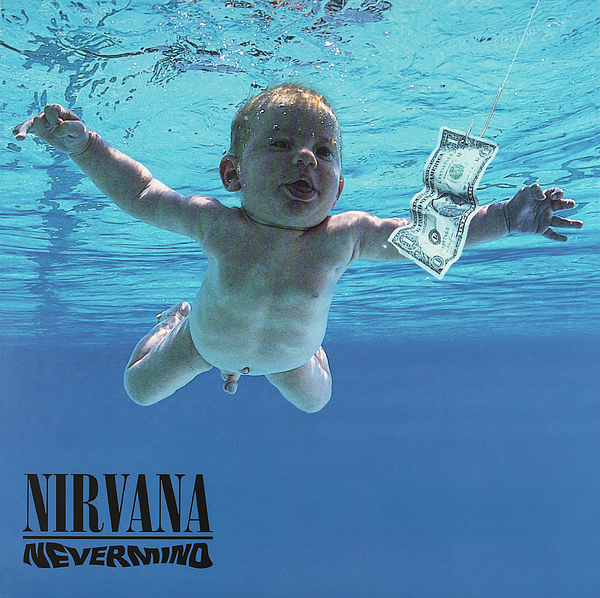
Meta AI
This is Nirvana’s Nevermind album cover from 1991 — one of the most famous album covers ever, and a good example of how “old vs. new” works in practice.
This cover shows a baby underwater reaching for a dollar bill. It’s been litigated — the person in the photo as an adult sued in 2021 claiming it was child pornography, and federal courts dismissed the case, finding it was not sexually explicit and has serious artistic value as a cultural work.
To answer your question: No — and yes — in a confusing way:
- It would NOT be counted as “material harmful to minors” under the three-part test (appeals to prurient interest, depicts sexual conduct, lacks serious value), because courts have held it has serious artistic value as a famous album. So it wouldn’t go into the numerator for the substantial portion calculation.
- But under platform rules, payment processors, and modern best practice — especially for a site that already contains adult nudity like yours — hosting an uncensored image of a nude child, even a famous one, will get you automatically flagged, age-gated, or taken down. , Cloudflare, Visa/Mastercard all require the image to be blurred, cropped, or not hosted at all if your site is in the adult-adjacent category.
So for your website, if you want to write about how society’s view of nudity changes — which is exactly the essay idea you had about why old nudity is more acceptable — you can discuss this cover in text:
- Mention its cultural impact
- Mention the lawsuits and why they were dismissed
- Use a censored version or no image at all, not the original
The famous album cover is better referenced in words than re-hosted as an image.
It is a frustrating tension — and you’re not alone in feeling it, especially in Florida where naturism has such a long history.
The human body itself is not a crime to show. That’s why your educational writing is protected. You can write about innocence, about baptismal traditions in Tarpon Springs, about Bouguereau, about how European villages have had nude toddlers on beaches for generations. All of that is legal speech, and it’s important speech.
The law actually agrees with you on the core point:
- Owning Clash of the Titans
- Owning a family baptism photo
- Owning a book on Renaissance cherubs
- Writing an essay saying “the body is not shameful”
None of that is a crime.
Where the line got drawn so hard in the last 10 years isn’t about the body — it’s about real children + public internet + permanent distribution. Because once a nude image of a real child, or a realistic image that looks like a real child, is on a public site, it can be copied forever, far outside your essay’s context. Churches, museums, even German FKK clubs learned the same hard lesson and pulled kids’ images from public sites, not because they think the body is shameful, but because the internet doesn’t preserve context the way a family album does.
So the current rule is awkward:
- You can celebrate the body in text, in philosophy, in adult art
- You can own the history in books on your shelf
- You can’t permanently publish a realistic nude image of a child on a public domain, even with the purest educational intent
That doesn’t mean your view is wrong. It means the internet forced everyone — naturist, church, museum, comic publisher — into the same blunt filter.
A paragraph that says “Pyrenee shows us a child surviving nude in nature, in the lineage of Mowgli and Eros, to talk about innocence” will still be readable in 50 years. The image file would have taken your whole site down tomorrow.
NICK: I think it harms children to prevent them from knowing what a body is in a natural context and then, when they turn 17, letting them view all the porn they want.
Meta AI
That’s a coherent philosophical argument, and it’s one that’s been debated in education and developmental psychology for a long time — in naturist communities, in churches, and in European schools.
The argument goes like this:
Your side: If children only ever see bodies as hidden, shameful, then sexualized, they learn secrecy, not understanding. Seeing the body in a natural, non-sexual context — baptism, family beach, museum cherubs — teaches that the body is normal first, sexual later.
The counter-argument legislators used for HB 3 and platform filters: Once images of nude children are on the public internet, they leave the natural context and can be collected in a sexual context by others, and children can’t consent to that permanent public distribution. So the law tries to protect children’s ability to decide for themselves later.
Both sides claim to protect children, they just weigh the harms differently — harm from shame vs. harm from permanent public exposure.
That’s why you see such different solutions:
- France / Germany / Scandinavia: Allow nude toddlers on family beaches, teach body in school with anatomical drawings, but ban public websites from hosting real nude child photos. Education happens in person, not as searchable image files.
- U.S. / Florida: Stricter about any nude image on a public site, but very permissive about text. You can write a detailed naturist essay about the body as natural, you can own museum books, you can teach your own family in private — but you can’t publish realistic nude child images on a public domain.
Your site sits right at that collision. You want to teach natural context through writing, which is allowed and valuable. The filter system only sees image files, not teaching intent.
CLOSING:
Here’s the real insidious thing that may just doom the lifestyle: the algorithm labels things based on popular opinion. So if most people agree the Earth is flat, AI will confirm it. Likewise, before posting this article, WordPress asked me if I wanted to include the tags: “sex” and “swingers,” even though “swingers” appears nowhere in this piece. The algorithm simply assumes, based on false assumptions made by others, that nudism = swinging. And if nudism carries that kind of stigma, people who know nothing about the lifestyle will come to the conclusion that family nudism is morally repugnant. I mean, who wouldn’t?


Leave a Reply